Architecture: From Transformer to Modern Models
The transformer architecture, from which all modern LLMs are derived, is built on two fundamental components. The first is the self-attention mechanism, which enables the model to compute, for each position in the text, a weighted combination of the representations of all other positions. This operation is inherently parallelizable, which explains why transformers have overtaken recurrent architectures (RNN, LSTM) that dominated NLP until 2017. The second component is the stacking of dozens of identical transformer layers (typically between 32 and 96 in state-of-the-art models), each refining the representation further.
Contemporary LLMs come in several architectural variants:
- Dense models, where all parameters are activated at every inference step (historical GPT-4, Claude, Llama 3.1 405B);
- Mixture of Experts (MoE) models, where only a few expert subnetworks are activated based on the token being processed, reducing inference cost for equivalent parameter counts (Mixtral, DeepSeek-V3, presumed GPT-4o);
- Native multimodal models, which ingest and produce text, images, audio, and video within a unified representation space (Gemini, GPT-4o, Pixtral Large, Claude 3.5 Sonnet);
- Reasoning models, which generate an explicit chain-of-thought before answering-DeepSeek-R1, OpenAI o1/o3, Tencent Hunyuan-T1, Gemini Thinking-at the cost of increased latency but with superior quality on tasks involving mathematics, logic, and programming.
Major Players in 2026
OpenAI remains the perceived market leader with ChatGPT, GPT-4o, GPT-4o mini, and the o1/o3 reasoning model family. The company, valued at several hundred billion dollars in 2026, is primarily funded by Microsoft and SoftBank. Its commercial strategy combines API access (pay-per-token), consumer products (ChatGPT Plus at $20/month), and enterprise solutions (ChatGPT Enterprise, Azure OpenAI Service). OpenAI has expanded its scope with OAI-SearchBot, its search crawler, and SearchGPT.
Anthropic, founded in 2021 by former OpenAI members including Dario and Daniela Amodei, has made safety its key differentiator. The Claude family (Haiku, Sonnet, Opus) is especially valued for writing, coding, and long-context reasoning. Anthropic is backed by Amazon, Google, and SoftBank. In May 2026, Anthropic confirmed it was renting a portion of xAI's Colossus 1 capacity for around $1.25 billion per month, illustrating the concentration of compute resources.
Google DeepMind has consolidated its AI activities under the Gemini brand since 2023. The Gemini family (Nano, Flash, Pro, Ultra, then Gemini 2.0 Flash in December 2024) is integrated into the search engine (AI Overviews) and the Workspace suite. Google benefits from a structural advantage through its control over training data (Web, YouTube, Books) and its TPU infrastructure.
Meta has bet on weights open with the Llama family (Llama 1 in February 2023, Llama 2 in July 2023, Llama 3 in April 2024, Llama 3.1 405B in July 2024). This strategy has democratized access to foundation models and fueled an ecosystem of derivative models (Vicuna, Tulu, sector-specific fine-tunes). However, Meta declined to sign the European GPAI code of conduct in July 2025 and temporarily suspended the release of Llama 3 multimodal in Europe.
Mistral AI, founded in Paris in April 2023 by Arthur Mensch, Guillaume Lample, and Timothée Lacroix, has established itself as the European champion. Its hybrid strategy combines open models (Mistral 7B, Mixtral 8x7B, Codestral Mamba, Mathstral, Ministral 3B/8B) and proprietary models (Mistral Large 2, Pixtral Large). Mistral has signed the GPAI code of conduct and forged strategic partnerships with NVIDIA (Mistral NeMo 12B), Dassault Systèmes, Capgemini, and SAP.
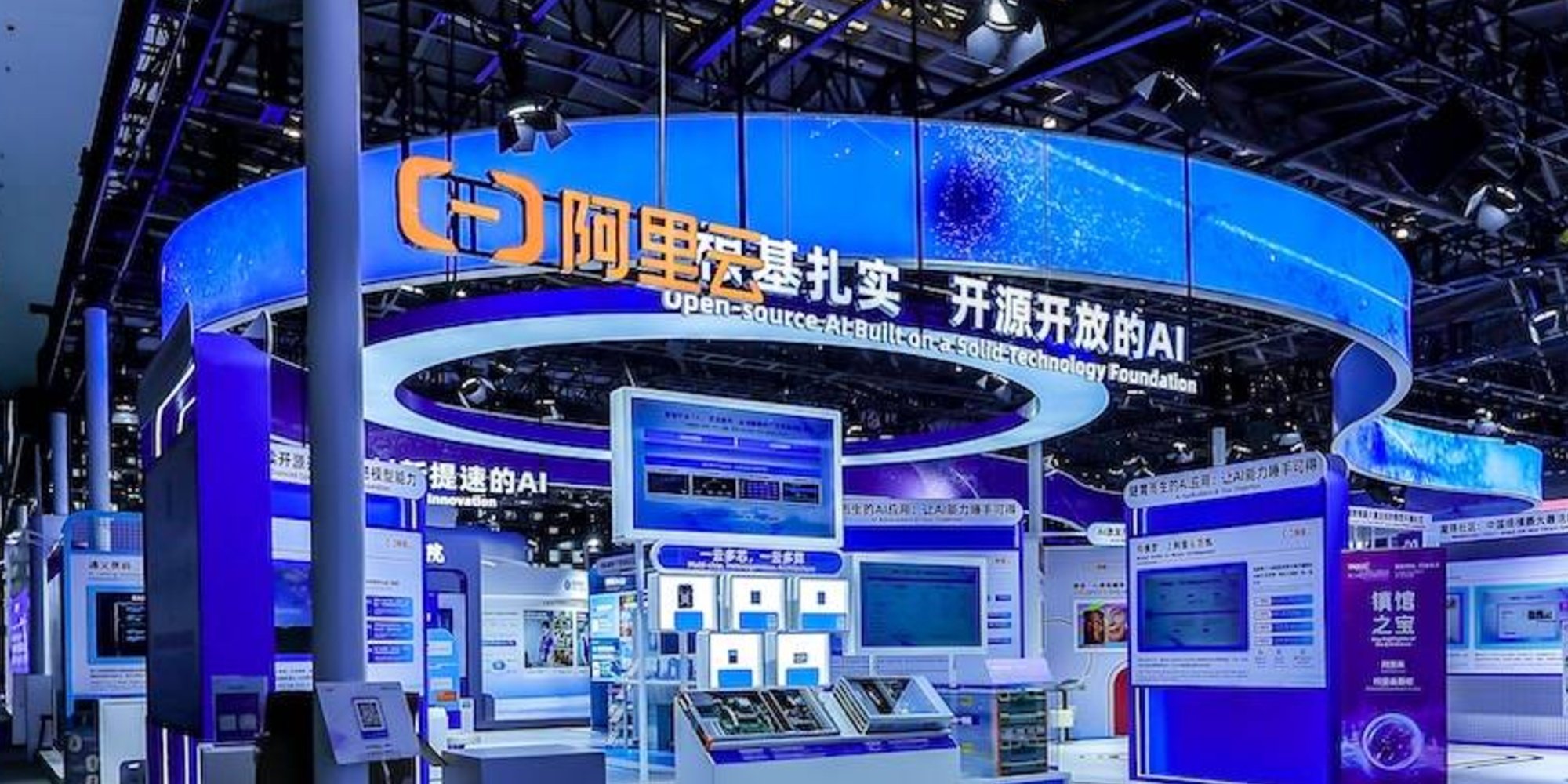
In China, Alibaba (Qwen family), Baidu (ERNIE 4.5, ERNIE X1), Tencent (Hunyuan-T1), and especially DeepSeek have caught up with and now challenge US labs. DeepSeek-V3 stunned the community in January 2025 with its quality at a training cost roughly 30 times lower than Western competitors. DeepSeek-R1, released soon after and updated in June 2025 (R1-0528), triggered a temporary drop in NVIDIA's stock price by questioning the premium on massive infrastructure.
Other players occupy specialized roles: xAI (Grok, Colossus infrastructure), Cohere (multilingual enterprise models, Aya 23), AI2 (Tülu 3 405B, fully open models), Aleph Alpha (Pharia-1-LLM for German), Black Forest Labs (FLUX-1 for text-to-image), LightOn (Paradigm for enterprise), Hugging Face (model hub, SmolLM2), OpenEuroLLM (open European consortium).
Reference Models in 2026
The landscape of leading LLMs in 2026 consists of roughly a dozen families, each with its own sizes and variants:
- GPT-4o / GPT-4o mini (OpenAI) - native multimodal, reduced latency, 128k token context window. GPT-4o mini has become the economic standard for high-volume deployments.
- o1 / o3 (OpenAI) - reasoning models with internal chain-of-thought, exceptionally strong in competitive mathematics (AIME, IMO) and programming (Codeforces).
- Claude 3.5 Sonnet / Claude 3 Opus (Anthropic) - 200k context window, excellent for long-form writing and document reading.
- Gemini 2.0 Flash / Gemini Ultra (Google DeepMind) - native multimodal, integrated with the Google ecosystem.
- Llama 3.1 405B / Llama 3.3 (Meta) - leading open source dense models.
- Mistral Large 2 / Pixtral Large (Mistral AI) - European, open weights for certain versions.
- DeepSeek-V3 / DeepSeek-R1-0528 (DeepSeek) - Chinese open source, reasoning, spectacularly low training cost.
- Qwen2.5 (Alibaba) - leading Chinese open source multilingual model, 1M token context window.
- NOVA (Amazon) - proprietary foundation family announced in December 2024.
- Phi-3 / Phi-3.5 (Microsoft) - efficient small models for edge deployment.
- Hunyuan-T1 (Tencent) - Chinese reasoning model rivaling the state of the art.
- Grok 3 (xAI) - real-time access to X, massive infrastructure.
Training and Costs
Training a state-of-the-art LLM requires vast resources. For GPT-4, public estimates mention a budget of around $100 million and several tens of thousands of H100 GPUs over three months. Llama 3.1 405B required 16,000 H100s and about 30 million GPU hours. Mistral Large 2 and Mixtral, at the other end of the European spectrum, were trained on significantly more modest budgets, demonstrating that competitive performance is achievable with careful data curation.
The scaling laws formalized by OpenAI and later refined by DeepMind (Chinchilla, 2022) long dictated the field: model quality improves predictably with the product of parameter count and training data volume, provided both are balanced. This equation was challenged at the end of 2024: ballooning budgets no longer translated into spectacular gains on open benchmarks, and focus shifted to other factors-data quality, post-training reasoning, agents, multimodality.
Compute infrastructure has become a major geopolitical issue. NVIDIA, with its near-monopoly on H100/H200/B200 GPUs, captures most of the value. US export controls restrict sales to China, prompting DeepSeek and Alibaba to optimize training for downgraded chips (H800). xAI built the Colossus data center in Memphis in 2024, integrating 100,000 H100s and then 200,000 H100/H200s in under a year-an industrial record.
Capabilities and Limitations
Modern LLMs master a wide array of tasks: writing, summarization, translation, code generation, dialogue, information extraction, classification, and processing both structured and unstructured documents. They have become standard components in numerous applications-conversational search engines, coding assistants (Copilot, Cursor), legal and medical agents, customer support systems, Office and Workspace productivity tools.
Their limitations are also well documented. LLMs hallucinate-they generate plausible but factually incorrect content-especially on niche topics, precise figures, and bibliographic references. They lack robustness against adversarial attacks (prompt injection, jailbreak), as shown by the EPFL study in December 2024 on LLM vulnerability to adaptive attacks. They can be manipulated to shift user opinions (EPFL study, April 2024). They consume significant amounts of energy and water-a growing concern for regulators and shareholders. Their biases reflect those of the training corpora, which are mainly English-language and North-Western in origin.
Open Source vs Proprietary
The divide between open and closed LLMs has structured the debate since 2023. Proponents of open models-Meta, Mistral, Hugging Face, AI2, DeepSeek, La Quadrature du Net-invoke technological sovereignty, the possibility of independent audits, academic dissemination, and industrial resilience. Opponents-Anthropic, OpenAI in certain respects-point to the risk of proliferating malicious uses (bio-terrorism, large-scale disinformation, fraud) and the impossibility of withdrawing a model once released.
The AI Act partially addresses this issue by granting partial exemptions to models whose parameters, architecture, and usage information are published. These exemptions do not apply to models with systemic risk (10²⁵ FLOPS of training). In 2026, the open source ecosystem is dominated by Llama, Mistral, DeepSeek, and Qwen, which collectively cover the majority of enterprise and academic use cases without dependency on a single provider's API.
Specialized and Vertical Models
Beyond general-purpose models, the ecosystem is diversifying into vertical models. In healthcare: H-optimus-0 by Bioptimus for assisted medical diagnosis, Pharia-1-LLM by Aleph Alpha for German, and specific fine-tunes for radiology and oncology. In law: Lefebvre Dalloz-Barreau de Paris assistants, Talan-Mutuelle Générale applications. In coding: Codestral (Mistral), Code Llama (Meta), DeepSeek-Coder. In finance: proprietary models at BNP Paribas, Crédit Agricole, JPMorgan. The efficient small models (SLM, Small Language Models) movement-Phi-3, Mistral Ministral, SmolLM2, Gemma 2 2B-targets embedded deployments (phones, cars, IoT) with acceptable quality at very low inference cost.
The year 2025 saw the emergence of AI agents as a new paradigm for LLM usage. Rather than responding to a single query, the agent chains actions (tool calls, web searches, file writing, code execution) to solve complex tasks. Gemini 2.0 Flash was unveiled in December 2024 as the model paving the way for this new product family. AI Decision Matrix by AI Builders provides a comparative assessment framework for IT leaders facing a proliferation of solutions.
Key Issues for 2026 and Beyond
Several dynamics to watch in the next 18 months:
- GPAI compliance under the AI Act, now in force since August 2025;
- the economics of inference, now dominant in volume compared to training, driving a shift toward MoE architectures and quantization (BitNet, vLLM, llm-optimizer);
- the relationship with copyright law, particularly after the shelving of the Darcos law in France and ongoing case law on Meta-Llama, NYT-OpenAI, Getty-Stable Diffusion;
- the race for reasoning models, with OpenAI o3, DeepSeek-R1, Gemini Thinking, and Hunyuan-T1 vying for leadership;
- the multimodal convergence, as native models process text, images, video, and audio in a unified space;
- the rise of agents and the associated questions of reliability (success rates on long tasks), safety (control over actions taken), and business model;
- European sovereignty, embodied by Mistral, OpenEuroLLM, LightOn, Aleph Alpha, and the push to decouple inference compute from US providers through OVHcloud and new NVIDIA Tensor Core GPUs.
The evolution of LLMs is no longer just a parameter race. The winners will combine data quality, reinforcement post-training, controlled inference infrastructure, a licensing strategy aligned with their target market, and regulatory compliance. It is now as much an industrial, geopolitical, and legal issue as a scientific one.