Logo ActuIA ActuIA

AI news from France

Français Español Italiano Deutsch Nederlands Română Polski Português العربية Türkçe Українська 中文 日本語 한국어
Publish
Home
AI Watch

By category

Funding Mergers & acquisitions Model release Product launch Partnership Public program / call for projects Regulation & governance Litigation Research & science Deployment & adoption Infrastructure & compute Corporate & strategy Security & incident Report & study Event

By sector

Company Culture Defense Education Finance Fundamental Research Health - medicine Industry Insurance Justice Marketing Media Risk Prevention Social networks Telecommunications Transport

By category

Funding Mergers & acquisitions Model release Product launch Partnership Public program / call for projects Regulation & governance Litigation Research & science Deployment & adoption Infrastructure & compute Corporate & strategy Security & incident Report & study Event

By sector

Company Culture Defense Education Finance Fundamental Research Health - medicine Industry Insurance Justice Marketing Media Risk Prevention Social networks Telecommunications Transport
Latest news
Language

Generative AI: 2026 Overview of Use Cases, Key Players, and Challenges

Go to latest news
Tech family
Generative AI (also known as GenAI) refers to the family of artificial intelligence models capable of producing original content (text, images, audio, code, video) from natural language instructions. Popularized by ChatGPT at the end of 2022, it has spread in less than three years across education, business, creative industries, law, healthcare, and media. With over 76% of users aged 18-34 in France according to Havas Market, and now natively integrated into Office, Workspace, iOS, and Android suites, generative AI has become an everyday infrastructure.

📰 Actualités récentes

Recent News

Generative AI, or GenAI, occupies a central place in the current artificial intelligence ecosystem, rapidly deploying across many sectors. In France, it is becoming a part of citizens' daily lives, particularly among young people, where its penetration reaches 76% among 18-34 year-olds, as revealed by a recent study by Havas Market. This phenomenon is accompanied by increased use in various fields such as health, leisure, and travel, demonstrating its potential to provide personalized and contextual responses. In the educational field, the Ministry of National Education has developed a framework to guide the use of GenAI in schools, emphasizing its role as an assistant rather than a substitute in the learning process. Students are now trained from primary school, with use allowed under supervision from the fourth grade, reflecting a willingness to prepare future generations for these new technologies.

Meanwhile, French companies show notable optimism regarding the adoption of generative AI, seen as a major productivity lever. A study by Cognizant, in collaboration with Oxford Economics, highlights a favorable environment in France, where 40% of leaders consider the regulatory framework conducive. However, challenges remain, notably the skills shortage, pushing companies to launch internal training programs. Despite these obstacles, the potential of GenAI as an innovation engine is recognized, with varied applications across sectors, illustrating diversified sectoral adoption. In the aeronautics field, Europrop International has opted for LightOn's Paradigm solution, thus integrating generative AI into its operations to optimize knowledge management while preserving the confidentiality of strategic data.

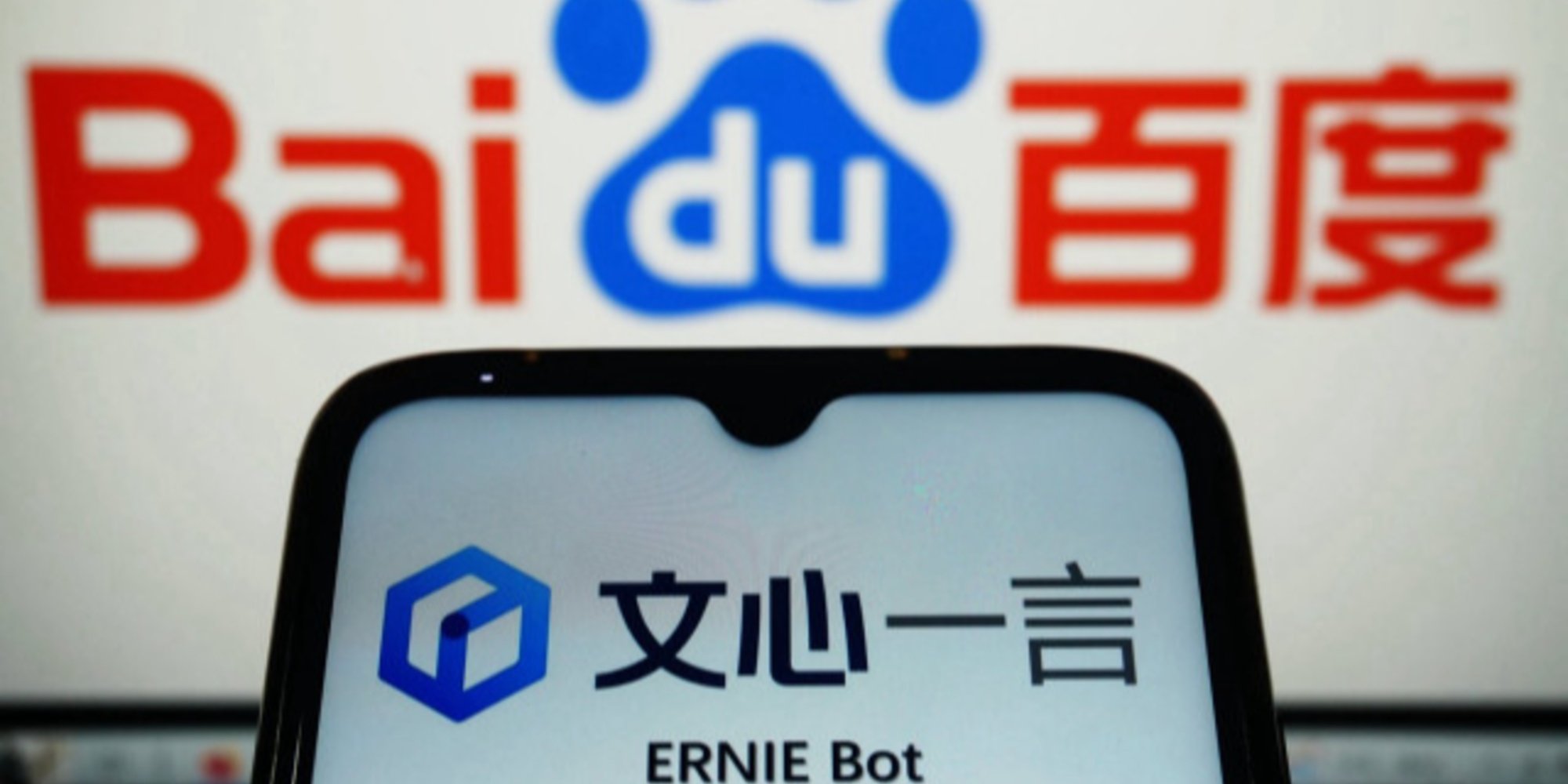
The adoption dynamics of generative AI are accompanied by significant technological developments. Baidu, a major Chinese player, has launched ERNIE 4.5 and ERNIE X1, two open-source models offering advanced multimodal understanding and reasoning performance at competitive costs. Their integration into tools like Ernie Bot aims to democratize access to these technologies while boosting competitiveness against American models. Furthermore, Google has made its NotebookLM tool available in a multilingual version, thus expanding its accessibility and content synthesis and management capabilities, particularly useful in the educational sector. These technological advances enhance the attractiveness of generative AI, while raising the question of governance and data management, which remains a major challenge for companies seeking to fully exploit these technologies.

Finally, the Spinoza project, led by Reporters Without Borders and the Alliance of General Information Press, underscores the importance of developing ethical generative AI tools dedicated to journalism. This initiative aims to enrich the work of journalists with reliable data while respecting the intellectual property of media. The "SpinozIA" report presents a series of recommendations to frame the use of AI in newsrooms, thus ensuring the integrity of information in AI systems used in journalism. This project demonstrates the desire to reinvent journalism in the digital age by integrating AI responsibly and ethically, while reaffirming the central role of newsrooms in producing quality content. These efforts highlight the ethical and strategic issues of generative AI, calling for continuous reflection on its integration into our societies.

Complete guide

Definition and Main Model Families

Generative AI encompasses four main families of models, categorized by the type of content they produce:

  • Text generation, dominated by large language models (GPT-4o, Claude 3.5 Sonnet, Gemini 2.0, Mistral Large 2, Llama 3.1 405B, DeepSeek-V3). Use cases: writing, dialogue, translation, summarization, coding, reasoning;
  • Image generation, led by diffusion models (Stable Diffusion, Midjourney, DALL·E 3, FLUX-1 from Black Forest Labs, Pixtral Large for comprehension). Use cases: illustration, design, generated photography, mockups, advertising;
  • Audio generation, which splits into speech synthesis (ElevenLabs, OpenAI TTS), music generation (Suno, Udio), and voice cloning-a particularly sensitive area from a legal standpoint;
  • Video generation, still emerging but accelerating: Sora (OpenAI), Veo (Google), Runway Gen-3 Alpha, Kling AI (Kuaishou). Latency and costs remain high for clips longer than a few seconds.

A fifth, cross-cutting category concerns native multimodal models, which ingest and produce multiple modalities within a unified representation space: GPT-4o, Gemini 2.0, Claude 3.5 Sonnet, Pixtral Large. These models pave the way for agents capable of analyzing screenshots, navigating interfaces, and generating text, images, and code as output.

Players and Ecosystem

The generative AI market is structured around a handful of dominant players and a multitude of specialists. OpenAI maintains perceived leadership with ChatGPT and the GPT-4/o-series family. Anthropic focuses on safety and long-context capabilities with Claude. Google DeepMind integrates Gemini throughout its ecosystem (Search, Workspace, Android). Meta bets on open source with Llama. Microsoft distributes OpenAI through Azure and Copilot. xAI leverages Grok and the Colossus infrastructure. Mistral AI stands out as the European champion. DeepSeek, Alibaba (Qwen), Baidu (ERNIE), and Tencent (Hunyuan) form the Chinese cluster.

In image and video: Midjourney (creative reference), Stability AI (Stable Diffusion), Black Forest Labs (FLUX-1, founded by former Stability AI members), Runway (Gen-3 Alpha), Pika Labs, Luma AI. In audio: ElevenLabs, Suno, Udio. Among specialized enterprise players: Cohere (multilingual enterprise models), LightOn (Paradigm, listed on Euronext Growth since October 2024), ChapsVision (acquired Sinequa, raised 85 million euros in November 2024), Aleph Alpha, OMI.

Integrators and consultancies play a central role in deployment: Capgemini (partnership with Mistral AI and SAP for regulated sectors announced in May 2025), Atos, Sopra Steria, Accenture, BCG, Bain. Enterprise software vendors (Microsoft 365, Google Workspace, Salesforce, SAP, Oracle, Snowflake, Databricks) have embedded GenAI at the core of their products.

Enterprise Adoption

Enterprise adoption follows a classic S-curve with several distinct phases:

  • Discovery / Experimentation (2023-2024): POCs, individual trials, training, selection of a foundational platform. The vast majority of French companies have gone through this phase.
  • Industrialization (2024-2026): large-scale deployment, governance, security, integration with IT systems, internal use-case marketplaces. This is the current phase for major corporations.
  • Transformation (2026+): reengineering of business processes, autonomous agents, measurable productivity gains, quantified ROI, native integration with specialized applications.

Several studies converge on the key success factors. The September 2024 Zoom study confirms the growing impact of GenAI on productivity-with measured gains of 20 to 40% for certain writing and support tasks. The August 2024 HubSpot study highlights the increasing role of AI in marketing strategies. Snowflake's April 2025 report underlines France's potential to accelerate. Qlik in March 2025 warns of the urgent need to bridge the ambition-reality gap within organizations. Linedata specifically points to challenges in asset management. Console Connect discusses the infrastructure challenges tied to rapid adoption. Hub France IA published a practical guide in July 2024 to help companies choose an appropriate GenAI model.

The main barrier, identified by all recent studies, is training: according to a July 2024 survey, this is the top challenge for French companies. Without upskilling employees, GenAI deployments remain limited to a few marginal use cases.

Sector-Specific Use Cases

Office productivity. This is the initial field for GenAI: email drafting, meeting minutes, presentations, translation. Microsoft Copilot and Google Workspace Gemini are the dominant implementations. Productivity gains vary widely by user profile: significant for writing tasks, more modest for complex analysis.

Marketing and communications. Campaign generation, large-scale personalization, social media, SEO. Adobe MAX 2024 showcased new GenAI features for photo, video, audio, and 3D creation. The August 2024 HubSpot study confirms increasing integration.

Coding and software development. Copilot (GitHub/Microsoft), Cursor, Codestral (Mistral), Claude (Anthropic) have become standard tools for developers. Measured productivity gains range from 20 to 55% depending on the task, with the strongest impact on boilerplate code rather than architecture.

Legal. Lefebvre Dalloz and the Paris Bar joined forces in November 2024 to democratize access to legal generative AI. Specialized assistants extract arguments from a case file, draft submissions, and compare case law. The issue of professional responsibility and verification remains central.

Healthcare. GenAI assists with diagnosis (radiology, pathology), report drafting, and triage in emergency settings. The November 2024 study on GenAI and medical diagnosis highlights potentially promising results but calls for further integration. Groupe Talan and Mutuelle Générale launched the "Lab IA" focused on health insurance in July 2024. H-optimus-0 from Bioptimus illustrates the potential of generative AI in medical diagnosis.

Education. The Ministry of National Education authorized the use of GenAI in schools in June 2025, under strict supervision. Quebec published a usage guide for education as early as November 2024. Student fraud remains a concern: a September 2024 study shows a rise in UK students using AI to cheat. The French Senate called in November 2024 for a regulatory framework for AI in education.

Media and journalism. The SpinozIA report from February 2025 proposes a vision for ethical generative AI serving journalism. Netflix used generative AI for the first time in an original production (L'Éternaute) in July 2025. The Nasse seminar in August 2024 explored competitive and economic issues of AI in the media sector. E-commerce-a sector cited by Havas Market-is undergoing profound change, with AI-assisted search and predictive personalization.

Generative AI in Enterprise: Typical Architecture

A modern GenAI architecture in enterprise combines several building blocks:

  • one or more foundation models selected according to use case (OpenAI via API, Anthropic via API, Mistral self-hosted, Llama on-premise);
  • a knowledge retrieval layer (RAG, Retrieval-Augmented Generation) that injects business context (documents, databases, ERP) into the prompt;
  • an orchestration platform managing prompts, guardrails, traceability, and metrics (LangChain, LlamaIndex, or native Microsoft/Google solutions);
  • a governance layer: AI Act compliance, decision traceability, human oversight, audit;
  • an end-user interface integrated with existing tools (Teams, Slack, Salesforce, ServiceNow).

Capgemini, Mistral AI, and SAP announced an alliance in May 2025 to facilitate GenAI deployment in regulated organizations, leveraging SAP Business Technology Platform. OVHcloud is accelerating AI democratization with new NVIDIA Tensor Core GPUs. ChapsVision, following its acquisition of Sinequa, offers an integrated solution for data sovereignty. LightOn and HPE launched a joint generative AI offering in July 2024.

Copyright and Intellectual Property

Copyright has become the primary legal battleground for generative AI. Model training relies on corpora containing protected works-news articles, books, photographs, sheet music, source code-without always securing rights holders' consent. The European Directive 2019/790 introduced a text and data mining (TDM) exception with a machine-readable opt-out, but its effectiveness remains contested.

Several landmark lawsuits are ongoing in 2026: The New York Times vs. OpenAI and Microsoft, Getty Images vs. Stable Diffusion, and multiple authors and publishers vs. Meta regarding Llama. In France, the rejection of the Darcos bill in the National Assembly on 12 May 2026 left rights holders (SACEM, SCAM, SACD) without a national legislative avenue, referring them instead to the application of Article 53 of the AI Act by the European Commission.

The main point of reference remains the AI Act and its Article 53, which requires general-purpose model providers to honor opt-outs and publish a sufficiently detailed summary of training data. The required level of detail for this summary is under negotiation between the Commission and industry. The first formal investigation procedures are expected by the end of 2026.

Risks and Controversies

Generative AI presents several well-documented risks:

  • Hallucinations: generating plausible but factually incorrect content. Especially critical in medical and legal contexts.
  • Large-scale disinformation: mass production of deepfakes, manipulated images and videos, particularly during election periods.
  • Opinion manipulation: the April 2024 EPFL study showed that LLMs can significantly alter users' opinions.
  • Cybersecurity: used by attackers to generate personalized phishing, malicious code, and deepfake audio for CEO fraud. Conversely, the May 2025 study shows LLMs are becoming a cybersecurity shield (vulnerability detection).
  • Brand and reputation: 47% of French respondents in August 2024 believe the integration of generative AI on social networks is a challenge for brand consistency.
  • Competition: the Google-Anthropic partnership was subject to a preliminary investigation by the UK competition authority in October 2024.
  • Environmental footprint: electricity and water consumption of data centers, a topic addressed in all 2024-2025 sustainability reports.
  • Sovereignty: dependence on a handful of US providers; European efforts to build alternatives (Mistral, OpenEuroLLM, LightOn, Aleph Alpha).

Outlook 2026-2027

Several structuring trends are emerging:

  • Agentification: moving from conversational assistants to agents autonomously executing long tasks;
  • Multimodal convergence: a single model for text, image, audio, video, and code;
  • Sovereignty: the rise of European and Chinese alternatives, with a possible balkanization of markets;
  • AI Act compliance: GPAI obligations effective since August 2025, first sanctions expected by the end of 2026;
  • Return of open source as the de facto standard for regulated and sovereign deployments;
  • Monetization of editorial data: partnerships between publishers (Le Monde, Axel Springer, News Corp) and model providers, opening a new revenue stream for media companies.

By 2026, generative AI is no longer a novelty. It has become an infrastructure layer that organizations are learning to integrate into their processes, culture, and governance. The challenge is no longer technical, but organizational, legal, and strategic. The winners will not necessarily be those with the most advanced technology, but those able to align model quality, business data quality, team training, and compliance with evolving regulatory frameworks.

Frequently asked questions

What is generative AI and how does it differ from other AI?

Generative AI produces new content (text, image, audio, video, code) from natural language instructions, unlike traditional AI, which classifies, predicts, or analyzes existing data. It is mainly based on transformer (text) and diffusion (image) architectures, trained on massive corpora.

What are the main generative AI tools in 2026?

For text: ChatGPT (OpenAI), Claude (Anthropic), Gemini (Google), Mistral Large, Llama, DeepSeek, Qwen. For images: Midjourney, Stable Diffusion, FLUX-1, DALL·E 3. For video: Sora, Veo, Runway Gen-3, Kling. For audio: ElevenLabs, Suno, Udio. Native multimodal models (GPT-4o, Gemini 2.0, Claude 3.5 Sonnet) combine several modalities.

How are companies adopting generative AI?

Adoption follows three phases: experimentation (POC, training), industrialization (large-scale deployment, governance, IT integration), transformation (process redesign, autonomous agents, measured ROI). In 2026, large French corporations are in the industrialization phase, SMEs and mid-sized companies are transitioning between the first two phases. Employee training remains the number one obstacle.

What is the ROI of generative AI in business?

Measured productivity gains range from 20 to 55 percent depending on the task (Zoom 2024 study and others). Gains are more significant for writing, coding, and customer support. They are more modest for complex analysis and strategic decision-making. Total ROI depends on the scope, the quality of business data injected (RAG), and the users' training level.

Does generative AI respect copyright law?

This is a central legal issue. The training corpora contain protected works without explicit consent from rights holders. Directive 2019/790 provides for a machine-readable opt-out, but its effectiveness is disputed. The AI Act (Article 53) requires providers of general-purpose models to respect these opt-outs and publish a summary of training data. Several lawsuits are ongoing (NYT vs OpenAI, Getty vs Stable Diffusion, authors vs Meta).

What are the main risks of generative AI?

Hallucinations (plausible but false content), disinformation and deepfakes, manipulation of public opinion (EPFL 2024 study), prompt injection and jailbreak, leakage of private data, vendor lock-in, environmental footprint, fraud assisted by generative voice AI. Several of these risks are addressed by the AI Act for systemic risk models.

What is the role of European players compared to American and Chinese giants?

Mistral AI is the European champion, followed by LightOn, Aleph Alpha, Black Forest Labs. The OpenEuroLLM consortium leads an academic effort. The AI Act is a tool of sovereignty that imposes transparency requirements on imported models. European competitiveness depends on access to computing (NVIDIA Tensor Core, OVHcloud, sovereign data center projects) and the quality of training data.

Does generative AI replace creative jobs?

No massive replacement observed in 2026, but a profound transformation of professions. Creative professionals (writers, illustrators, translators) integrate AI as a productivity and variation tool. Some repetitive tasks are automated (subtitling, transcription, stock illustration). The most exposed profiles are those focused on reproducible tasks. The most protected are those combining domain expertise and human judgment.

How should generative AI be regulated in schools and universities?

The French Ministry of National Education authorized supervised use in June 2025. Quebec published a guide in November 2024. The French Senate called for a regulatory framework in November 2024. Common principles: transparency on uses, training in critical thinking, source verification, adaptation of assessments (oral exams, group projects, presentations), prohibition in certifying exams.

What is the difference between generative AI and an AI agent?

A generative AI produces content in response to a prompt. An AI agent chains actions (tool calls, web browsing, code execution, file writing) to autonomously accomplish a complex task. Agents rely on generative AI but add an orchestration layer, memory, and feedback. Gemini 2.0 Flash was presented in December 2024 as the model opening this path.

How to choose a generative AI model for your company?

Main criteria: quality on the target use case (to be tested), cost per token, latency, context window, multilingual capabilities, hosting (API vs on-premise), license, AI Act compliance, integration with existing tools. The Hub France IA published a practical guide in July 2024 to help guide these choices. A multi-model strategy is often preferable to a single vendor lock-in.

Does generative AI really consume a lot of energy?

Yes, in absolute terms, especially for training. Training a state-of-the-art model consumes as much as several hundred households in a year. Inference (each user query) consumes less individually but adds up over billions of daily queries. Optimizations (quantization, distillation, efficient models like Phi-3, BitNet) significantly reduce the footprint. Water used to cool data centers is an increasing concern.

on the same theme

Articles récents

9 articles liés à ce sujet

The Eternaut: Netflix Uses Generative AI for the First Time in an Original Production

The Eternaut: Netflix Uses Generative AI for the First Time in an Original Production

Last Thursday, during the release of Netflix's second quarter 2025 results, Ted Sarandos, co-CEO of Netflix, confirmed the use of generative AI in The...

Ethics of Artificial Intelligence
Jul 21, 2025 Read more →
The Use of GenAI is Allowed in Schools but Under Supervision

The Use of GenAI is Allowed in Schools but Under Supervision

In response to the increasing use of AI in education, the Ministry of National Education has opted to regulate this practice, emphasizing respect for...

Jun 18, 2025 Read more →
Capgemini, Mistral AI, and SAP Join Forces to Accelerate GenAI Adoption in Regulated Sectors

Capgemini, Mistral AI, and SAP Join Forces to Accelerate GenAI Adoption in Regulated Sectors

Capgemini extends its partnership with Mistral AI and SAP to facilitate the deployment of generative AI in regulated organizations, using the SAP Busi...

May 27, 2025 Read more →
The Rise of GenAI in the Daily Lives of the French: A Turning Point for Online Commerce

The Rise of GenAI in the Daily Lives of the French: A Turning Point for Online Commerce

Generative AI is increasingly adopted by the French, especially among 18-34 year-olds with 76% of users, according to a study by Havas Market. AI infl...

AI Market
May 19, 2025 Read more →
Google Makes NotebookLM's AI Available in Multilingual Version

Google Makes NotebookLM's AI Available in Multilingual Version

Google announces that NotebookLM, its intelligent note-taking tool based on generative AI, is now available in a multilingual version. Initially offer...

Commercial product
Apr 30, 2025 Read more →
The Adoption of GenAI in France: A Promising Potential to Accelerate, According to Snowflake

The Adoption of GenAI in France: A Promising Potential to Accelerate, According to Snowflake

Despite tangible results, French companies struggle to scale generative AI use. Snowflake's report highlights measurable ROI but modest budget commitm...

Digital transformation
Apr 22, 2025 Read more →
GenAI: According to Qlik, Bridging the Gap Between Ambition and Organizational Reality Becomes Urgent for Businesses

GenAI: According to Qlik, Bridging the Gap Between Ambition and Organizational Reality Becomes Urgent for Businesses

According to Qlik, bridging the gap between ambition and reality becomes urgent for businesses as they face challenges in effectively adopting GenAI.

Apr 19, 2025 Read more →
Baidu Accelerates in GenAI with ERNIE 4.5 and ERNIE X1, Two Free Models

Baidu Accelerates in GenAI with ERNIE 4.5 and ERNIE X1, Two Free Models

With the launch of R1, DeepSeek not only created a shockwave in Silicon Valley but also intensified competition within the Middle Kingdom.

AI Market
Apr 19, 2025 Read more →
NVIDIA GTC Conference Returns from March 17-21, 2025 in San Jose (California) and Online

NVIDIA GTC Conference Returns from March 17-21, 2025 in San Jose (California) and Online

The NVIDIA GTC conference, a major annual event for artificial intelligence and accelerated computing professionals, will take place from March 17 to...

Apr 21, 2025 Read more →

Statistiques

Articles totaux 9
Contenu mis à jour 4 days ago
Logo ActuIA Logo ActuIA

Your source of information on artificial intelligence and its advances.

Navigation

  • Legal notice
  • Contact

Follow us

© 2019-2026 Net Square Digital. All rights reserved.